By Ana Lucía Olmos Álvarez
Art, Culture and Health: Weaving Bridges Through Open Science
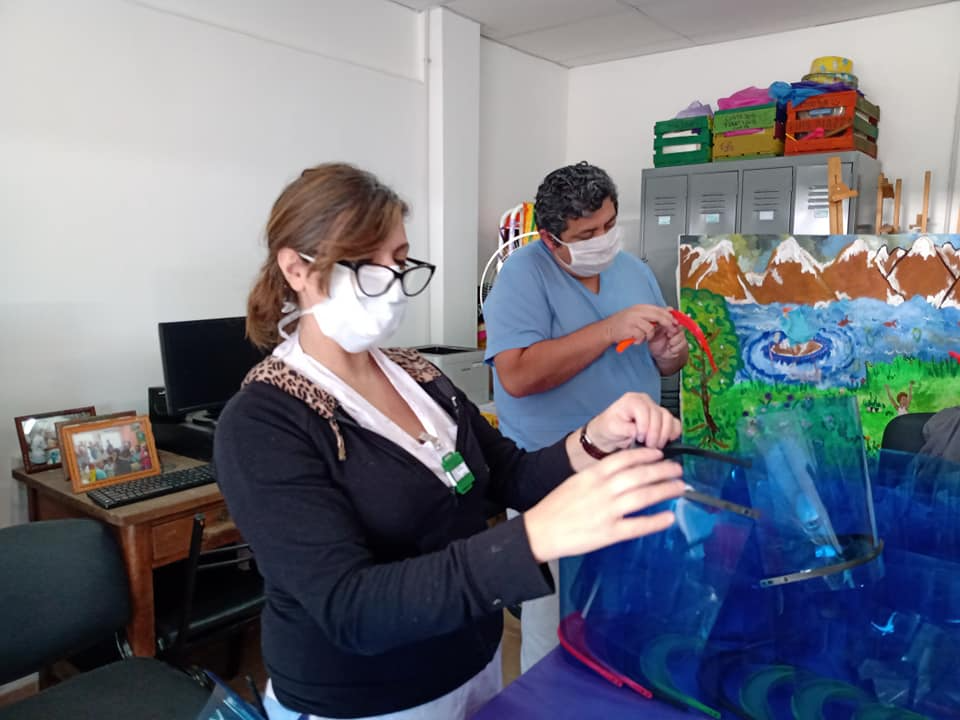
n recent years, several public hospitals in the City of Buenos Aires (Argentina) have been transformed into unexpected spaces of artistic and cultural production: murals breaking through grey walls, trees dressed in colourful crochet squares, interactive installations inviting visitors to leave testimonies, mobile libraries, art therapy spaces, and clowns walking down hallways.
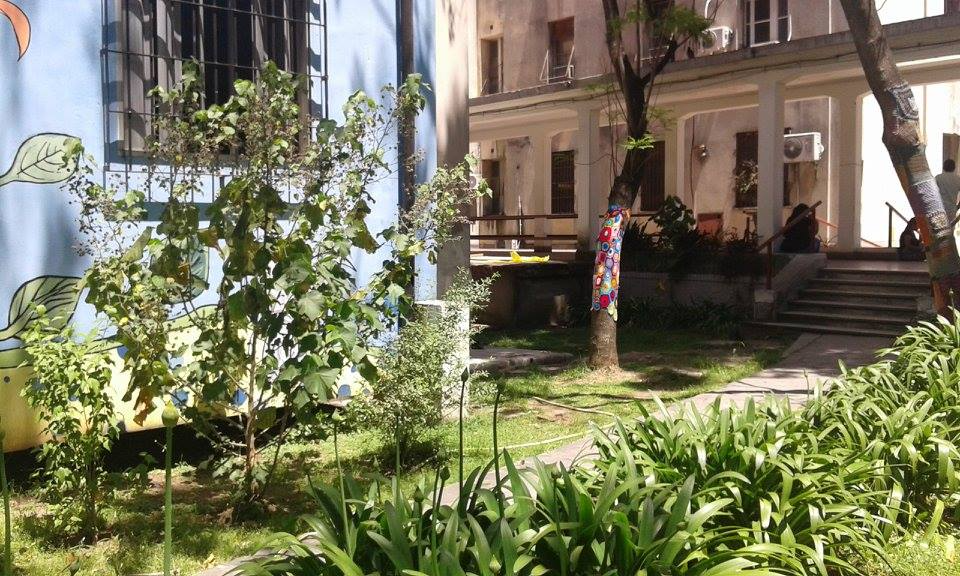
These actions are not merely aesthetic interventions—they are part of a growing network of cultural management in healthcare, which pursues a dual aim: to humanise the hospital experience and to broaden the ways we understand healthcare.
A recent study on these initiatives reveals that, although they occur in spaces where biomedical logic prevails, they introduce new forms of care that acknowledge the social and cultural dimensions of the health–illness–care process. Where biomedicine tends to focus solely on individual physiological processes, cultural management (re)introduces bonds, stories, emotions, memories, and creative expressions that strengthen community ties and promote well-being (Olmos Álvarez, 2023).
This approach invites us to reconsider what we mean by health and who participates in its construction.
Approaching these experiences through the lens of open science allows us to reinterpret them, meaning not only producing knowledge about them in a collaborative and accessible way, but also recognising the actors involved — cultural managers, artists, health professionals, patients, and third-sector organisations — as co-producers of knowledge.
Opening science in this field implies:
- Documenting and publicly showcasing these practices through digital repositories, open databases, and collaborative platforms that bring together materials, impact evaluations, and shared learnings.
- Incorporating participatory methodologies that involve users, hospital communities, and artistic collectives in the design and evaluation of cultural health programs.
- Recognising and legitimising diverse forms of knowledge (not only biomedical) as part of therapeutic strategies, promoting horizontal dialogue among disciplines, sectors, and agents.
- Fostering open inter-institutional networks that share resources, funding, tools, and training to sustain these projects over time.
In this way, open science not only broadens access to knowledge but also enables new forms of political advocacy and collaboration.
Looking at the Hospital with New Eyes
“We want to take the grey out of the hospital,” says a cultural area coordinator, recalling the first murals that broke through the monotony of blank walls.
Another cultural manager recalls how they started:
“We went around the hospital looking for people who knew how to do something — take photos, play music, knit… and that’s how we started building the workshops.”
These initiatives, often born “out of sheer will” and sustained through creativity and daily effort, show that health is not only about treating diseases — it also means caring for emotions, relationships, memories, and desires.
Open science can help ensure these experiences do not remain invisible or isolated, but instead circulate, strengthen, and multiply. Because opening science also means opening space for imagination and shared care.
Olmos Álvarez, A. L. (2023). “Acá, es todo a pulmón”. Actores, escenarios/acciones y desafíos de la gestión cultural en salud pública en Argentina. Politicas Culturais Em Revista, 15(2), 207-228. https://doi.org/10.9771/pcr.v15i2.47071
 GLOSA
GLOSA 
Leave a comment